
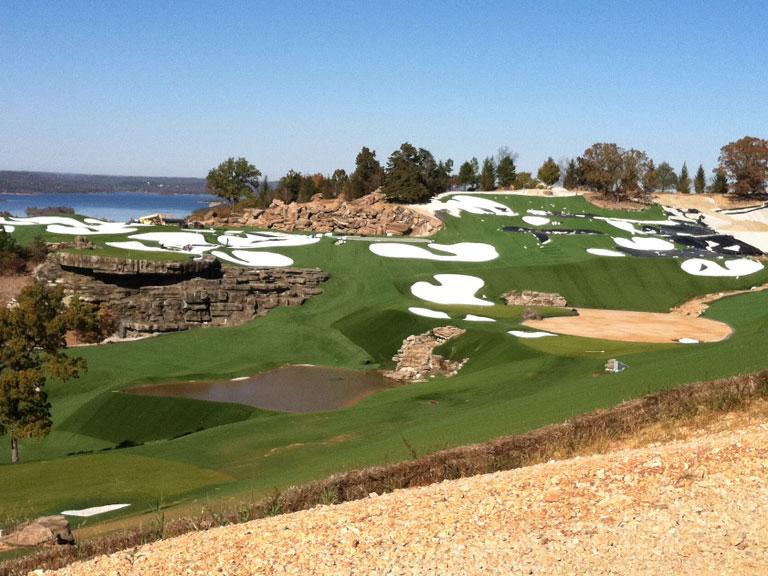
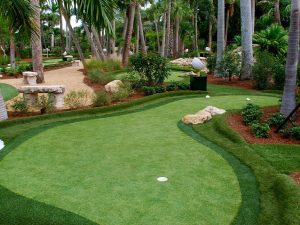
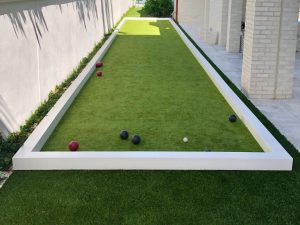
A great backyard putting green starts with four choices- the spot, the size, the slopes, and a turf that can survive South Florida weather. Nail those, and you get a green that rolls true for years. No mowing. No watering. No brown patches in August.
We’ve been building greens in this part of the state for over 24 years now, and our crews put down more than 400,000 square feet of turf annually. So we’ve seen what works, and honestly, we’ve seen what doesn’t. Below is the same thinking we walk our own clients through.
Pick the Right Spot and Size for Your Synthetic Putting Green
People are often surprised by how little room they actually need. Plenty of the greens we install sit around 300 to 500 square feet, and they play great. If you’ve got a bigger yard, sure, go larger. You’ll get longer lag putts, more ways to set the pins, and maybe even some chip shots from distance.
Where it goes is a bigger deal than most homeowners expect, though. Will you see it from the lanai? Does the late-day sun bake that corner? Is it squeezed against the pool deck? On a recent backyard putting green in Boca Raton, we actually shifted the whole layout about six feet so the owners could watch the kids putt from the kitchen window. Small move, huge difference.
Give It Some Breaks (But Don’t Overdo It)
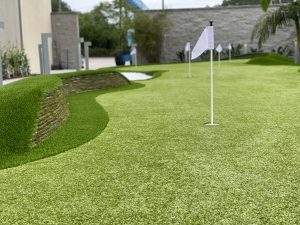
A perfectly flat green is fun for about a week. After that, you stop learning anything from it. A little movement in the surface, maybe a soft tier or a slow left-to-right drift, makes you read every putt like you would on the course.
That said, we’ve been called in to fix greens that look like a skate park. Cramming steep slopes into a small backyard putting green just makes it frustrating. Two or three honest breaks are usually plenty, and moving the cups around keeps things interesting.
Choose Turf That Can Handle Florida
Our climate is rough on outdoor materials. The sun is relentless, and South Florida sees roughly 60 inches of rain in a typical year. Too flat is no fun. Too much slope and the ball never sits. We hear these stories all the time from people who went with the lowest bid on a backyard putting green in Palm Beach and regretted it within two summers.
A few things worth asking about before you sign anything:
- Does the ball roll like real bentgrass or Bermuda?
- Are the fibers UV-stabilized to keep their color?
- How does the base drain after a heavy storm?
- Did you choose the right turf for your play?
Don’t Skimp on What’s Underneath
Nobody posts photos of a sub-base on Instagram. But it’s really what decides whether your green still plays well in year eight. We use crushed fines, graded so water runs off instead of sitting there, and that’s what keeps low spots from creeping in over time.
Thinking about a backyard putting green and talking to installers? Ask them straight out how deep they dig and how they finish the edges. If the answer is vague, that tells you something.
Make It Yours With a Few Extras
Here’s where it gets fun. Some clients only want to putt. Others want a little short-game setup where they can work on everything inside 30 yards.
The add-ons we’re asked about most:
- Fringe turf around the edges for chipping
- A small sand bunker
- Landscape lighting for night practice
- A hitting mat for pitch shots
Why the Builder Matters
Rickie Fowler and Sam Burns are among the professional golfers who use Southwest Greens putting surfaces. Golf Digest has also recognized Southwest Greens for its synthetic putting greens. That experience matters because every backyard putting green is built with the same focus on quality, playability, and careful installation.
FAQs
How much space is needed?
Around 300 square feet gets you a real, usable green. With 500 to 1,000+, you’ve got room for variety.
How many cups should it have?
Two or three suits most smaller greens. Bigger ones can handle four or five without feeling crowded.
Can speed and difficulty be customized?
Yes. The turf, the infill, and the shaping all affect speed, so we can match it to the course you play most.
Should homeowners add fringe?
We’d say yes nine times out of ten. It looks finished, it blends into the yard, and it gives you a place to chip from.
What about chipping areas, bunkers, or lighting?
All doable. Just plan them early, so the drainage and wiring go in before the turf does.
Ready to Talk About Your Green?
Give us a call and let’s sketch out something that fits your yard and your game.
Phone: 561.694.1557
Address: 7481 SW Jack James Dr, Stuart, FL 34997
Hours: Monday – Friday, 9am – 5pm
Free Estimate: swgreens.com/free-estimate